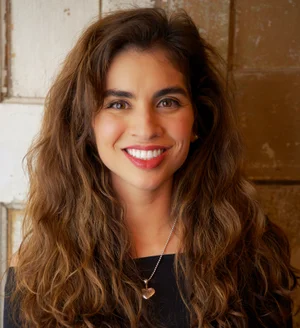
How Amy Silva created the Collaborative Doula Collective and Conference
Amy Silva built the Collaborative Doula Collective and the Collaborative Doula Conference out of personal grief and a vision that doulas from every modality and background can support each other. She started the Collective first (now just under two years old), then the Conference. Her model includes birth, postpartum, abortion, grief, loss, end-of-life, and death doulas alongside Christian, Black, indigenous, and LGBT communities. She built it to break down silos.
You might see Amy's work described as trailblazing. She'd call it necessary.
What motivated Amy Silva to start the Collective?
Amy didn't set out to make money or build a brand. She set out to fill a gap she lived through herself.
After losing her mother to suicide and finding herself pregnant six months later, Amy navigated pregnancy and birth without her mom. That grief, mixed with the joy of becoming a mother, shaped everything that came after. She supported single moms, younger women with fractured maternal relationships, and clients whose joy walked hand-in-hand with loss. She learned early that you don't need identical experiences to hold someone through their hardest moments. You need emotional intelligence, presence, and the humility to learn from every single client.
The Collective came out of that belief. Amy wanted to prove not just to herself but to the broader doula community that collaboration across all modalities and identities wasn't just possible. It was powerful.
How did the Collective come first?
The Collaborative Doula Collective launched just under two years ago as a gathering space before it became a business. Amy self-funded every expense that first year because she believed in what it could become. The Collective officially incorporated last May, just before the first conference.
Today it holds just under 120 doulas across Canada, the US, the UK, Thailand, and New Zealand. It includes every modality from preconception through end-of-life. It includes every community. That's not an accident. It's the architecture.
Amy explains it this way: "I needed to prove that everybody could be in community together, regardless of our own personal beliefs. If you do the same work, run in the same circles, you are still in community with each other."
The Collective funds workshops (five this month alone), pays for the conference live stream so doulas worldwide can attend, and reinvests every dollar back into the community. Amy and her ownership team haven't paid themselves yet. That's the trade-off when you're building something bigger than revenue.
Why is Amy Silva's full-spectrum approach different?
Most doula communities niche down. Birth doulas with birth doulas. Loss doulas with loss doulas. Amy went the opposite direction and caught heat for it.
After the first conference, some birth doulas complained they wanted all birth content on one day so they could skip the rest. Amy's response? "You're missing the point." The whole purpose of the Collaborative Doula Conference is cross-pollination. Birth and death are two sides of the same coin. If you left the conference without understanding how grief, joy, postpartum, and end-of-life work interconnect, you weren't paying attention.
Several birth doulas told Amy after the 2025 conference that they didn't realize how connected everything was until they sat in sessions outside their lane. Some are now exploring grief and death work. That's exactly what she built it for.
Amy makes it clear: "If you don't like how I'm doing it, go do it a different way. I'm okay with that. I'll find my people."
Her people are the ones who want to grow, who recognize that learning from every client (good or bad) is non-negotiable, and who understand that you don't need to have experienced the exact same loss to support someone through it.
What's the reality behind building a conference this size?
Here's what most people don't see: Amy runs the conference with a tiny team. Herself, the Collective's ownership team (Christina and Delaney), a handful of volunteers, and community members who pitch in with referrals and support.
The conference depends on ticket sales to pay for the venue, the live stream, and speakers. When Amy talks about the conference, she's on the verge of tears. Not because it's failing, but because the emotional and logistical weight of leading something this big with so few resources is crushing. She's raw, overwhelmed, and still showing up.
She admits she spent a lot of time crying before and after the first conference. Feedback stung. Some doulas accused her of "stealing their dream." Others felt competitive instead of collaborative, even within the Collective itself.
But here's the kicker: doulas outside the Collective are calling Amy a trailblazer. They're telling new members they need to join, even though they themselves haven't signed up. That external validation (the kind that comes from people who see the impact without being inside it) means something.
The emotional toll of leadership nobody talks about
During our conversation, Amy was visibly emotional. She's in a tender, raw season. She's grieving her aunt, who has chosen MAID (medical assistance in dying) and may pass before the May conference. Amy might not even be at her own event (the one she poured years of work into) because if her aunt needs her, that's where she'll be.
That's the reality of building something heart-led. You don't get to compartmentalize. Your personal life, your grief, your joy, it all shows up in your work because your work is an extension of who you are.
And yet, Amy keeps building. She's launching a 12-month, 160-hour in-person doula mentorship program (announcement coming in May). She's already scheduled speakers for the 2027 conference. She's creating frameworks around emotional intelligence and personal development because that's where 99% of doulas are lacking, not in technical skills.
What kind of doula does Amy Silva want you to become?
Not a cookie-cutter one.
Amy is done with doula trainings that churn out students like numbers on a balance sheet. She wants emotionally intelligent doulas who do the inner work. Doulas who take leadership courses, who understand bias, who know that supporting someone through loss doesn't require you to have experienced that exact loss yourself.
She wants doulas who learn something from every single client. If you're not learning (good or bad), you're not doing this work right. That's a hill she'll die on.
Amy's own emotional intelligence came from lived experience. A professor once told her she had remarkably high emotional intelligence for her age, then said, "I know before we even start this conversation that you've gone through so much in your life to have this." Amy's response? "You are not wrong."
Her lowest score? Impulsivity. And she doesn't see that as a flaw. She created a 12-month mentorship program after impulsively asking her Collective if she should. She built the conference after dreaming about it for years and finally just doing it. Sometimes impulsivity is just clarity in motion.
What makes the 2026 conference worth attending?
This year's theme is "From Hope to Legacy." The lineup includes speakers across birth, postpartum, death, grief, MAID research, NICU, digital systems, veterans' mental health, and more. There's a full panel on men, mental health, and grief. There's a networking night based on books and authors in the doula and grief space.
If you're a birth doula who thinks you don't need to hear from death doulas, Amy would tell you: you're missing the point. If you think legacy is something that happens after decades of work, look at what Amy has built in under two years and reconsider.
The Collaborative Doula Conference isn't about content you can't find anywhere else. It's about being in the same room with people doing different work than you and realizing how deeply connected it all is. That's the magic. That's the legacy.
If you want to be part of a community that values emotional intelligence over technique, collaboration over competition, and growth over comfort, check out the 2026 Collaborative Doula Conference and get your ticket.
Frequently Asked Questions
How did Amy Silva create the Collaborative Doula Collective and Conference?
Amy Silva created the Collaborative Doula Collective first, just under two years ago, as a space for doulas from all modalities and backgrounds to connect. She self-funded it initially, then incorporated it as a business last May. The Collaborative Doula Conference grew directly out of the Collective's momentum, with Amy bringing together speakers and workshops that intentionally cross birth, death, grief, and postpartum work to break down silos in the doula community.
What makes Amy Silva's doula community different from others?
Amy Silva's Collective includes all doula modalities (birth, postpartum, abortion, loss, end-of-life, death) and all communities: Christian, Black, indigenous, LGBT, and more. Most doula groups niche down. Amy did the opposite, building a space where collaboration across difference is the whole point. The focus is shared purpose and emotional intelligence, not identical beliefs or specialties.
Is it possible for different kinds of doulas to truly work together like Amy Silva says?
Yes. Amy Silva has proven it with nearly 120 doulas across multiple countries and every doula modality working together in the Collaborative Doula Collective. Birth doulas who attended the first conference told Amy they didn't realize how connected birth and death work were until they sat in sessions outside their niche. Cross-pollination isn't just possible. It's where the growth happens.
Why should I care about full-spectrum doula work if I'm just a birth doula?
Because birth and death are two sides of the same coin. Understanding grief, postpartum, and end-of-life work makes you a better birth doula. Amy Silva's conference intentionally mixes modalities so you learn from people doing different work. Several birth doulas left the 2025 conference newly interested in grief and death work because they finally saw how interconnected it all is. If you only want birth content, you're missing the point of true community.
Take the $10K Assessment
Free Revenue Bottleneck Analysis
Why Your Doula Business Is Stuck Under $10K/Month
Take this 2-minute self-assessment and discover the exact bottleneck holding you back from consistent five-figure months.
For birth workers making $1K, $10K/month who want to break through without working more hours.