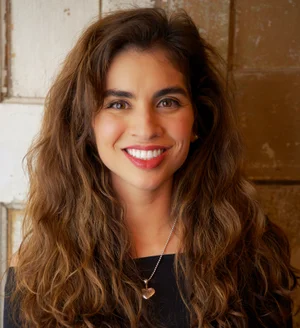
What doula training leaves out according to Krystil Hofsky
Birth advocate and educator Krystil Hofsky argues that traditional doula training misses the most important parts: internal self-mastery, emotional resilience, and the ethical weight of supporting vulnerable families. She says typical training focuses too much on techniques like hip squeezes and comfort measures while ignoring the confrontation of personal biases, systemic realities, and the deep inner work required to advocate in the birthing room.
You can memorize every acupressure point. You can pack the perfect doula bag. You can know the cascade of interventions backward and forward. But if you freeze when an OB rushes consent, if you shrink when a nurse dismisses your client, if you override your own intuition to keep the peace, then your training left out the part that matters most.
Krystil Hofsky knows this firsthand. After becoming a doula in 2018, attending multiple trainings, and walking into the hospital system with confidence, she still experienced a traumatic birth as a client. She knew the language. She knew what consent was supposed to look like. And it still happened to her.
That experience shattered everything she thought she knew about birth work and exposed the massive gap between what doulas are taught and what birth actually demands.
Why doula training focuses on techniques instead of self-mastery
Most doula trainings teach you the logistics. How to time contractions. How to apply counter-pressure. How to use a TENS unit. Krystil Hofsky attended five separate doula trainings and heard the same information recycled over and over again. What she did not hear was any honest conversation about the internal work required to hold space in one of the most vulnerable moments of a woman's life.
Being a doula is self-mastery work. It's not about the tools in your bag. It's about your ability to regulate your own nervous system when the room is moving fast. It's about confronting your need to be liked, your fear of authority, your tendency to freeze under pressure. Krystil Hofsky explains that many doulas she mentors one-on-one share the same struggles: they are terrified of their number one job, which is to advocate.
You can't do this work well if you're still performing the "good girl facade." If you're waiting for permission to speak up, if you're prioritizing the provider's comfort over your client's autonomy, if you're abandoning your intuition to avoid conflict, then you're not fully serving the family in that room.
The training tells you not to bring your bias into the birth room. But after doing the deep inner work, you need to bring your voice. You need to own your clarity. You need to trust yourself enough to slow down a room that is moving too fast.
What happened when Krystil Hofsky had her own traumatic birth as a doula
Krystil Hofsky's son was born in 2021 after a pregnancy that was physically and emotionally brutal. She had severe hyperemesis for seven out of nine months. She was hospitalized. She was barely functioning. When she moved back to New York from California at six months pregnant, she needed to find a new provider quickly.
She found a homebirth midwife. From the first interaction, her body screamed no. The midwife was condescending. Every red flag was there. But she was the only midwife available, and Krystil Hofsky ignored her intuition because she needed care. At 41 weeks and five days, the midwife performed an unconsented membrane sweep. The next day, she dropped Krystil Hofsky from her care via text message and blocked her phone number.
Krystil Hofsky went to the hospital without a provider. She was induced. She was given Demerol without consent. She was checked vaginally multiple times without consent every time her husband left the room. The epidural failed three times. They told her she needed an emergency cesarean at eight centimeters with no medical indication. Her son went to the NICU. She doesn't remember his first cry because she was so heavily medicated.
She knew the system. She knew the language. She knew what consent was supposed to look like. And it still happened to her. That's what broke the illusion. She walked away asking herself: Why didn't I stop it? Why did I freeze? Why did I override my body? Why didn't I trust myself?
Those questions followed her into postpartum for years. She carried anger, grief, and shame because she believed she had failed, especially as a doula. Her nervous system was wrecked even though her body healed fine. That experience stripped away the romantic idea she had about birth work and forced her to see the system for what it actually is.
The advocacy gap most doula trainings never address
Advocacy is barely part of the conversation in most doula trainings. You're told not to speak for your clients because it disempowers them. Most doulas interpret that to mean they should stay silent, sit in the shadows, and let providers do whatever they want. That's not advocacy. That's abandonment.
Krystil Hofsky teaches that real advocacy is not about arguing or being loud or confrontational. It's about protecting your client's autonomy when things are moving fast, which in the hospital means always. Autonomy gets chipped away quietly. Providers rush through explanations. They say "you have to" when they mean "we recommend." They use medical language that sounds like a death sentence to a laboring mother.
Advocacy means slowing down the room and putting power back in your client's hands. It means asking clarifying questions. It means checking in with your client before you assume what they want. Krystil Hofsky has had clients who were adamant they did not want an epidural, and then the nurse offered it and the client said yes. If you jump in and speak for them without asking them first, you look foolish and you center yourself instead of your client.
Your ego has no place in that room. You will get attached to outcomes because you love your clients. Some of them will become close friends. But your job is to educate them, prepare them, and empower them to make their own decisions in real time. You can't control what they do when you're not there. You can't force them to do the exercises or the breath work or follow their birth plan.
The problem is in the misunderstanding of what advocacy actually looks like. It's not about jumping in and taking over. It's about reading the room, regulating yourself, and slowing everything down so your client has the space to make an informed choice. If it takes two hours to get to the OR, it's not an emergency. If you can wait 30 minutes to see how the monitor looks, it's not an emergency. Period.
Why doulas need to understand the system, not just homebirth
Krystil Hofsky hears the same thing from new doulas all the time: "I only want to do homebirths." She understands the appeal. Homebirths feel safer, more aligned, less medicalized. But if you only focus on homebirth clients, you're missing the bigger picture.
This is humanitarian work. If you want to make real impact, it will likely happen inside the system. You need to know how hospitals operate. You need to understand power dynamics. You need to recognize that some providers who get recommended by other doulas are just as harmful as the old-school OBs who gave episiotomies to three out of every four patients.
Krystil Hofsky lives in an area with hundreds of doulas. She sees the same group of midwives recommended over and over again, and she knows from direct experience that those midwives pull the same coercive, boundary-violating moves as the worst hospital providers. If doulas think those are "good providers," then something is deeply missing from their training and discernment.
You can't improve birth outcomes if you don't understand the system you're working within. You can't advocate well if you don't know how hospital protocols actually function versus how they're supposed to function. You can't serve families well if you only work with the 2% who can afford homebirth and already have access to better care.
The mothers who need you most are the ones walking into hospitals without support, without education, without a voice. If you want to do work that matters, you need to be willing to step into the system and learn how to move within it without being swallowed by it.
What Krystil Hofsky built after her own birth trauma
Krystil Hofsky carried grief and anger for years after her son's birth. She replayed every moment. She questioned herself relentlessly. Eventually, she reached a point where she realized she had to do something with all that pain. She had to turn it into purpose.
In October 2024, she launched Innerbloom Doula Institute, a training program built around the reality of what birth work actually requires. The program has graduated over 150 doulas. It teaches the technical skills, but it also teaches advocacy, business, physiology, and internal leadership. Students graduate as birth doulas, postpartum doulas, and childbirth educators with lifetime certifications.
The core of Innerbloom is depth. It trains people who know how to use discernment and self-lead in the birthing space. It's not for everyone. But if you want to do this work well and hold the responsibility that comes with it, Innerbloom is designed to prepare you for what actually happens, not what you wish would happen.
Krystil Hofsky did not want to create another doula training that romanticizes birth work. She wanted to create a program that tells the truth. The truth is that this work is hard. It will break you open. It will force you to confront every limiting belief, every people-pleasing pattern, every place where you have shrunk yourself to stay safe. And if you're not willing to do that internal work, you won't be able to serve your clients the way they deserve.
What you can do differently after reading this
If you've been through doula training and you feel unprepared, you're not alone. If you freeze in the birth room, if you struggle to speak up, if you doubt yourself constantly, that doesn't mean you're a bad doula. It means your training did not equip you for the reality of this work.
Start with the internal work. Get honest about where you shrink, where you people-please, where you abandon yourself. Work on your nervous system regulation. Practice slowing down. Learn how to stay grounded when the room is chaotic. Understand that your energy and your voice have power, and that power is exactly what your clients need from you.
Stop romanticizing birth work. Stop pretending it's just about knowing techniques. This is self-mastery work. This is leadership work. This is about showing up fully resourced so you can hold space for someone else in their most vulnerable moment.
And if you're considering becoming a doula, know this: the training is just the beginning. The real education happens in the rooms where you have to choose between staying silent and speaking up. Choose your voice. Choose your clients. Choose yourself.
If you want to learn how to build a doula business that reflects your values and attracts clients who are ready for your voice, check out how to price your doula services without undercharging.
Frequently Asked Questions
What does Krystil Hofsky say doula training leaves out?
Krystil Hofsky says doula training leaves out the internal self-mastery, emotional resilience, and ethical preparation required to support vulnerable families. She argues that most trainings focus on techniques like comfort measures and labor positions but do not teach doulas how to confront their own fears, regulate their nervous systems, or advocate well within the medical system.
Is Krystil Hofsky right that doulas need more than just training skills?
Yes. Krystil Hofsky experienced her own traumatic hospital birth despite being a trained doula who knew the system and the language of consent. Her experience proved that technical knowledge is not enough. Doulas need deep self-awareness, the ability to use their voice under pressure, and an understanding of how power dynamics work in hospital settings to truly serve their clients.
Why should doulas care about hospital systems instead of just homebirth?
Krystil Hofsky teaches that if you want to make real impact, it will likely happen inside the hospital system where most births take place. Focusing only on homebirth clients means serving a small percentage of families who already have more resources and support. The families who need doulas most are the ones entering hospitals without advocacy or education, and doulas can't serve them well without understanding how the system operates.
Why am I not getting clients even with doula training?
If you're not getting clients after doula training, you may be speaking to everyone instead of owning a clear message that connects with a specific type of client. Krystil Hofsky and other successful doulas emphasize that trying to appeal to everyone means you connect with no one. You need to get clear on who you serve, what you stand for, and how to communicate your value without people-pleasing or shrinking your voice.
Take the $10K Assessment
Free Revenue Bottleneck Analysis
Why Your Doula Business Is Stuck Under $10K/Month
Take this 2-minute self-assessment and discover the exact bottleneck holding you back from consistent five-figure months.
For birth workers making $1K, $10K/month who want to break through without working more hours.